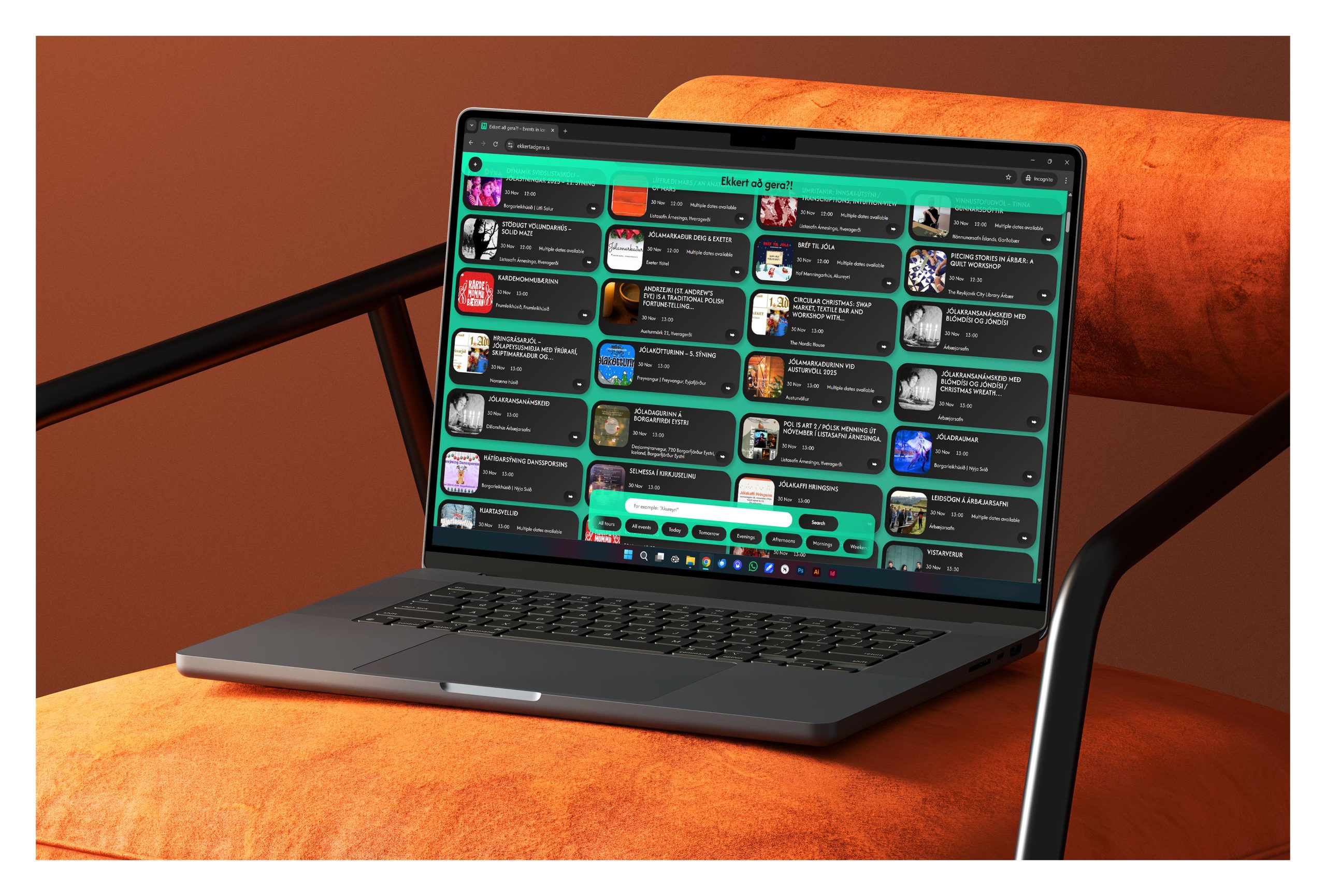
Ekkert að gera?!
(is there really nothing to do?!)
Introduction
Ekkert að gera?! is an AI-powered website which was born of simple idea was born of a simple idea for better advertising of events. As a result, the website combines all the events happening in Iceland in just one place.
A quick market study revealed that the population of Iceland generally struggles to find what is going on. Events are scattered through multiple platforms, from websites to Facebook.
Even though it was initially thought for hafnar.haus and other collectives, it soon became clear that the best way to maximize reach would be to create a platform that everyone would like to use.
ekkertadgera.is collects events from multiple sources and allows to filter them by date and time. The idea is not to filter by type of event, but rather provide an alternative answer to “what’s there to see and do?” in Iceland.
Exploratory Research
A short survey directed to Reykjavík residents was created and applied in order to understand their pain points. The main research goals were to understand:
- How easily can people find events?
- Do they usually find something that interests them?
- What are the platforms they use?
Research and Ideation
Keep reading for the full process OR jump to any of the following sections:
User Statements
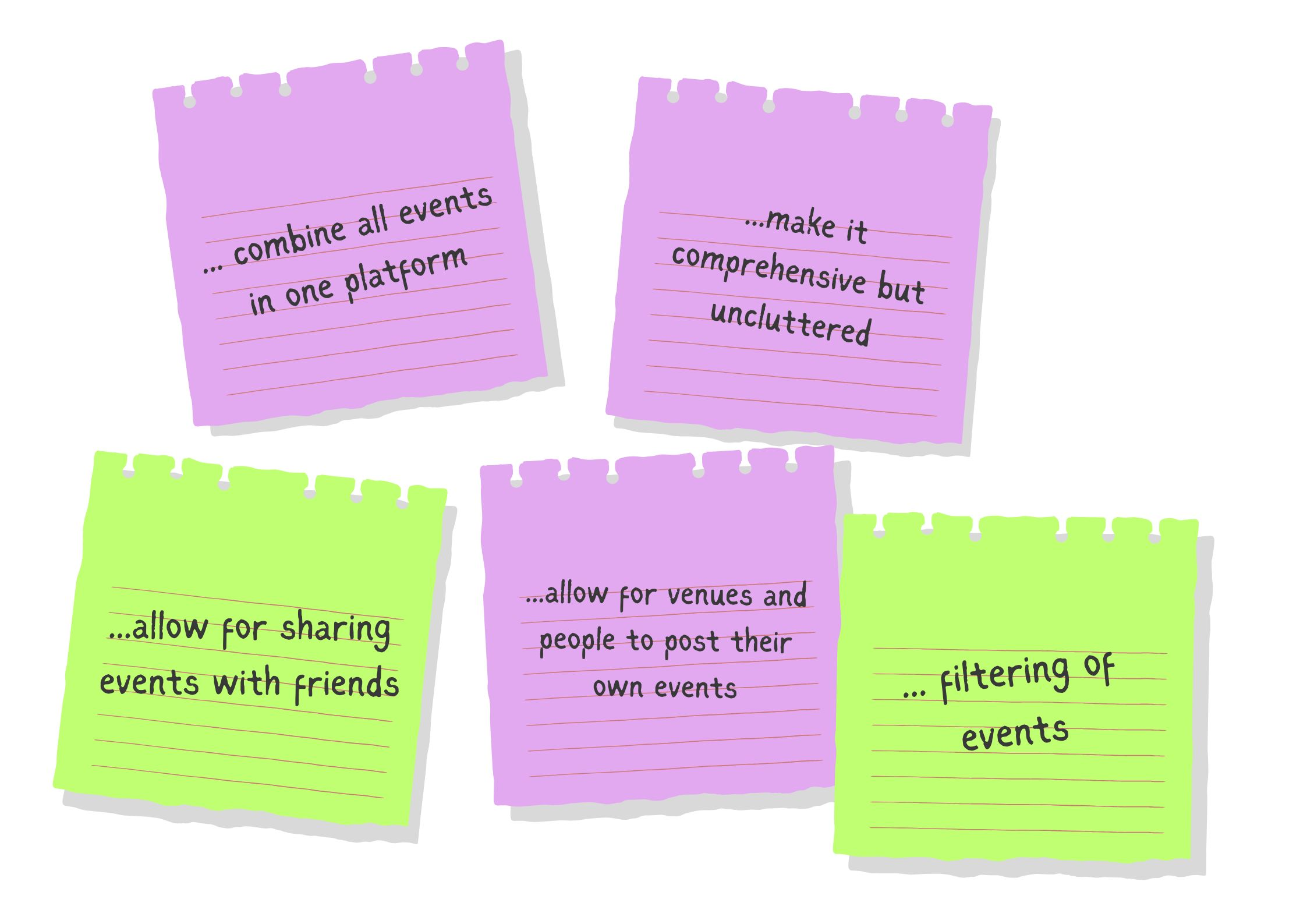
After conducting research which resulted in a somewhat large body of information, the data was organized in the form of User Statements for a better understanding and addressment of the user problems.
- People often struggle to find events which match their interests
- Information about events, from concerts to exhibitions, is scattered all over the web
- General opinion is that producers are bad at advertising due to high ad costs
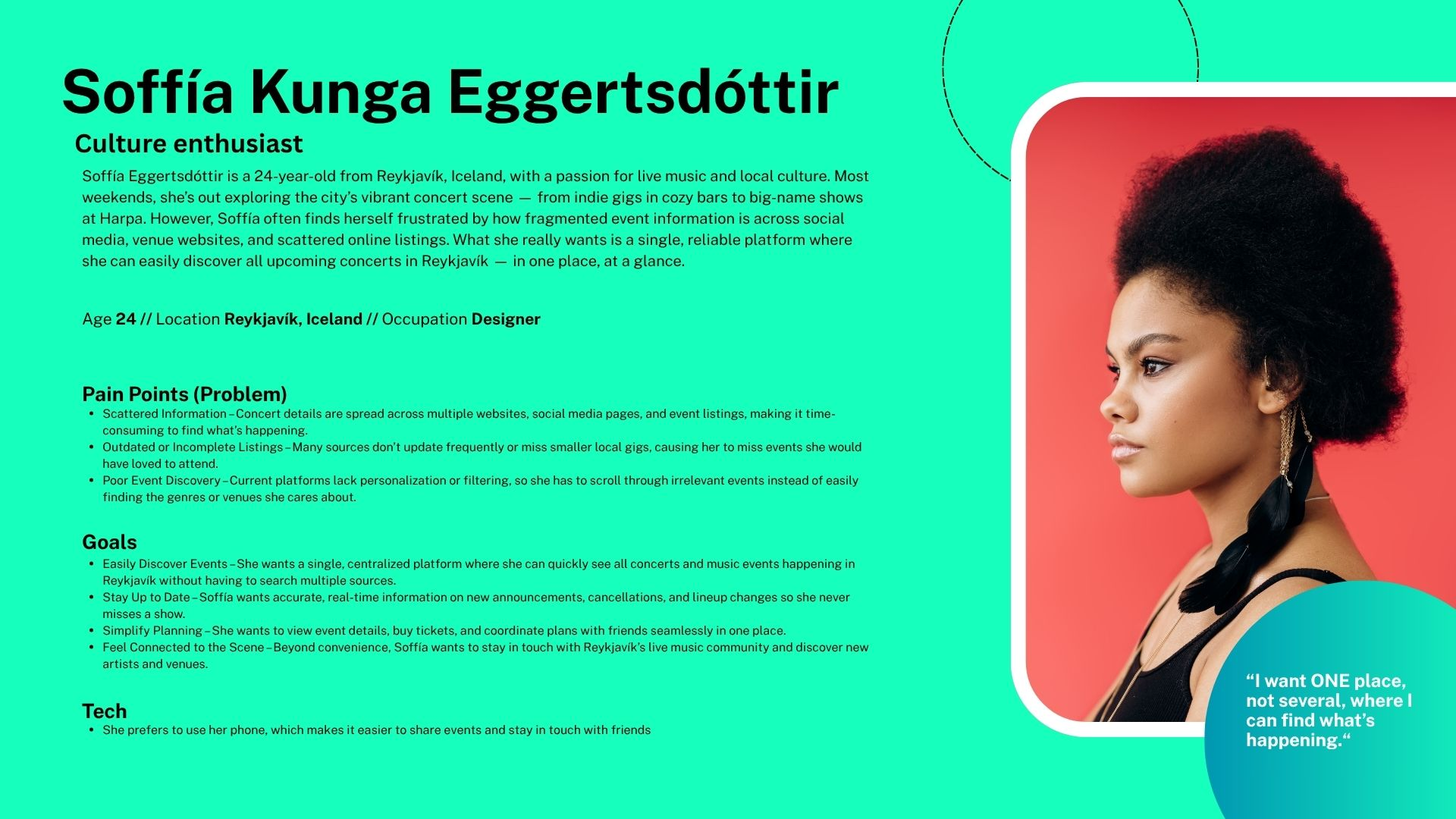
User Persona
A typical User Persona was created based on the insights obtained from the User Statements. As a culture enthusiast, Soffía wishes to be able to quickly scan what’s going on to attend some amusing events with her friends.
Issues to Solutions
The User problems and pain points acted as a trigger to start the creative process. The main idea would be to create an app to sum up all events in one place, but how? In order to do so, the User Statements were then rephrased into “How could we” questions:
First Concepts
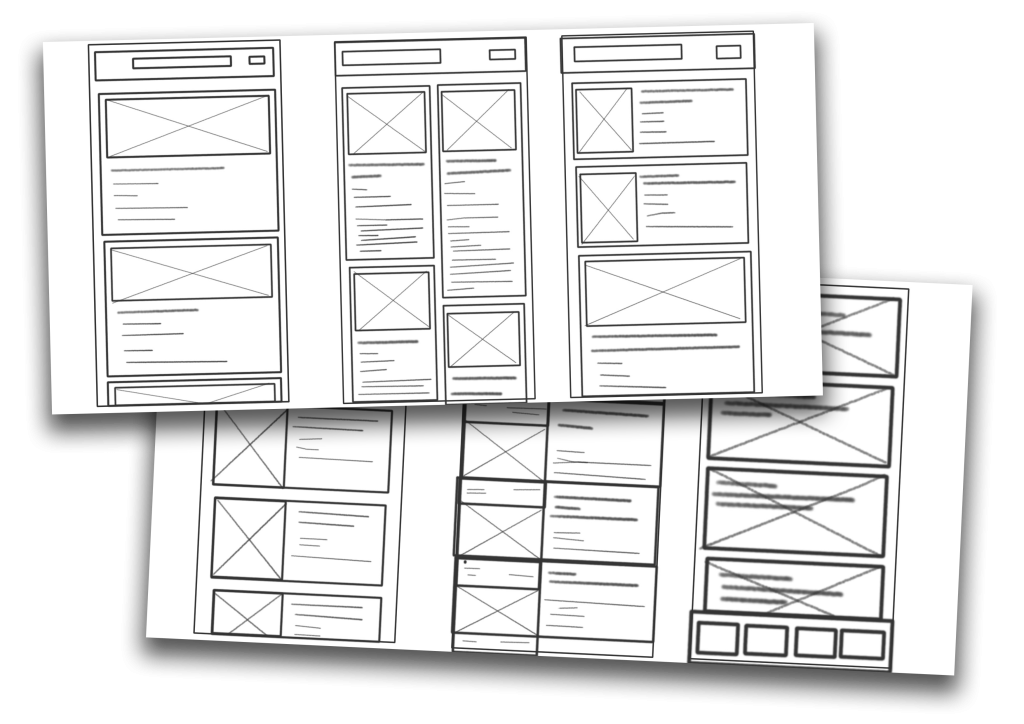
To understand what the possibilities were, the first sketches were drawn using drawing software and a touchscreen laptop. From all the designs, the idea of an “events card” emerged. The preferred design featured an image on the left, and inline information on the right, due to screen space optimization reasons.
User Story
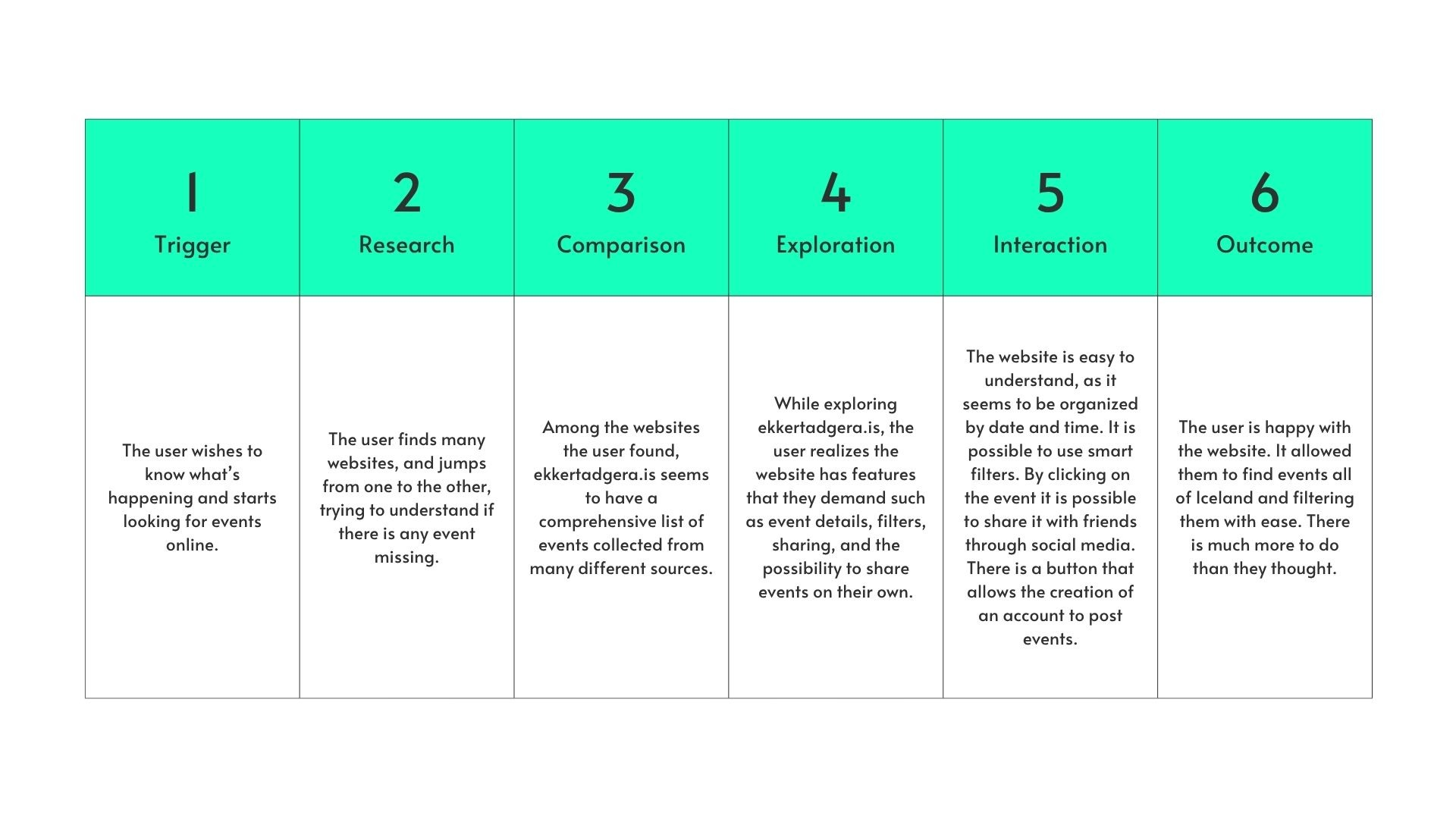
Based on the information collected, a User Story was created and its main ideas summarized into a simple table chart.
User Journey
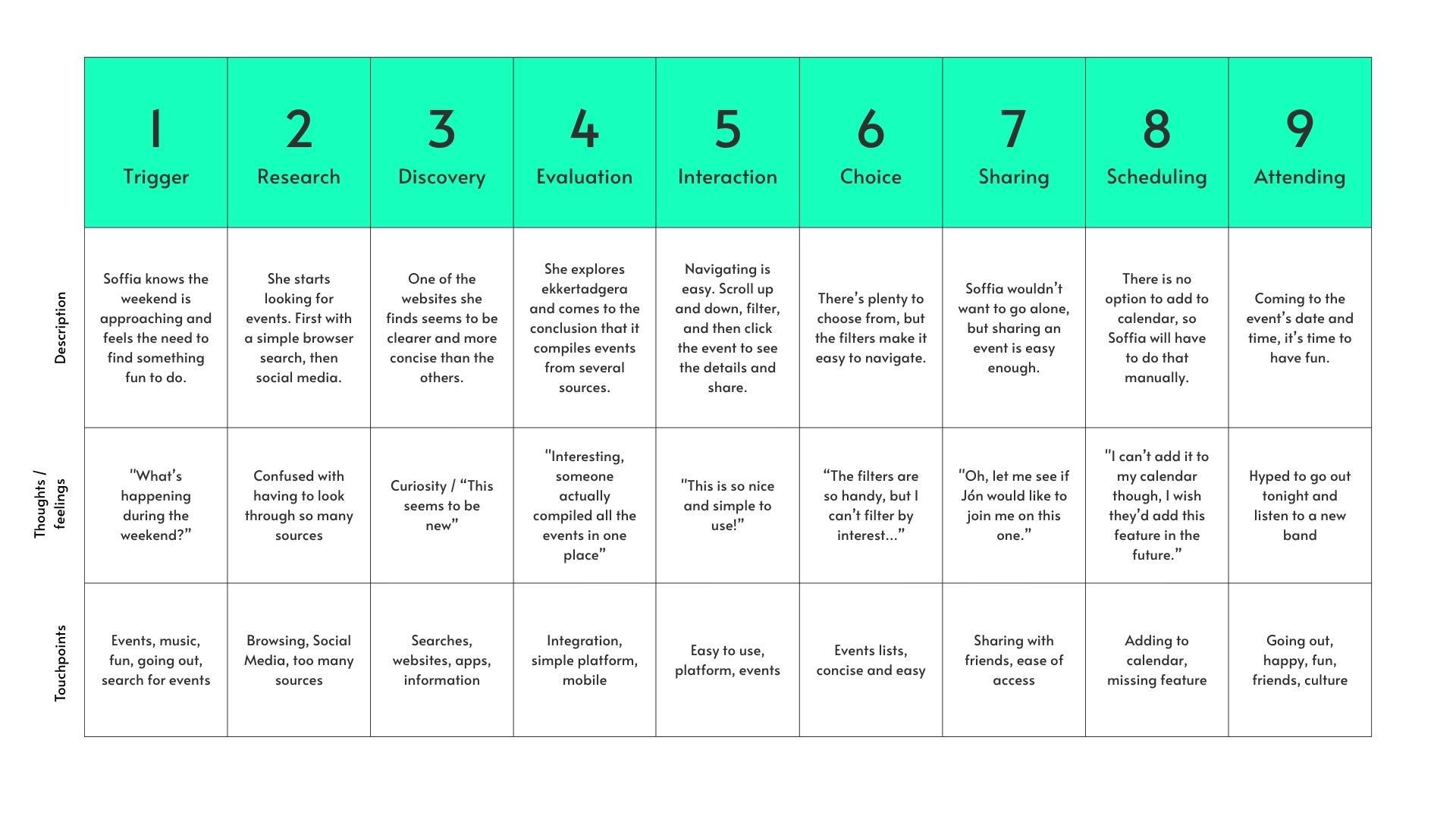
To create empathy for the users and their goals while also revealing potential for improvement in the user experience, a User Journey was developed.
App Design
Keep reading for the full process OR jump to any of the following sections:
Information Architecture
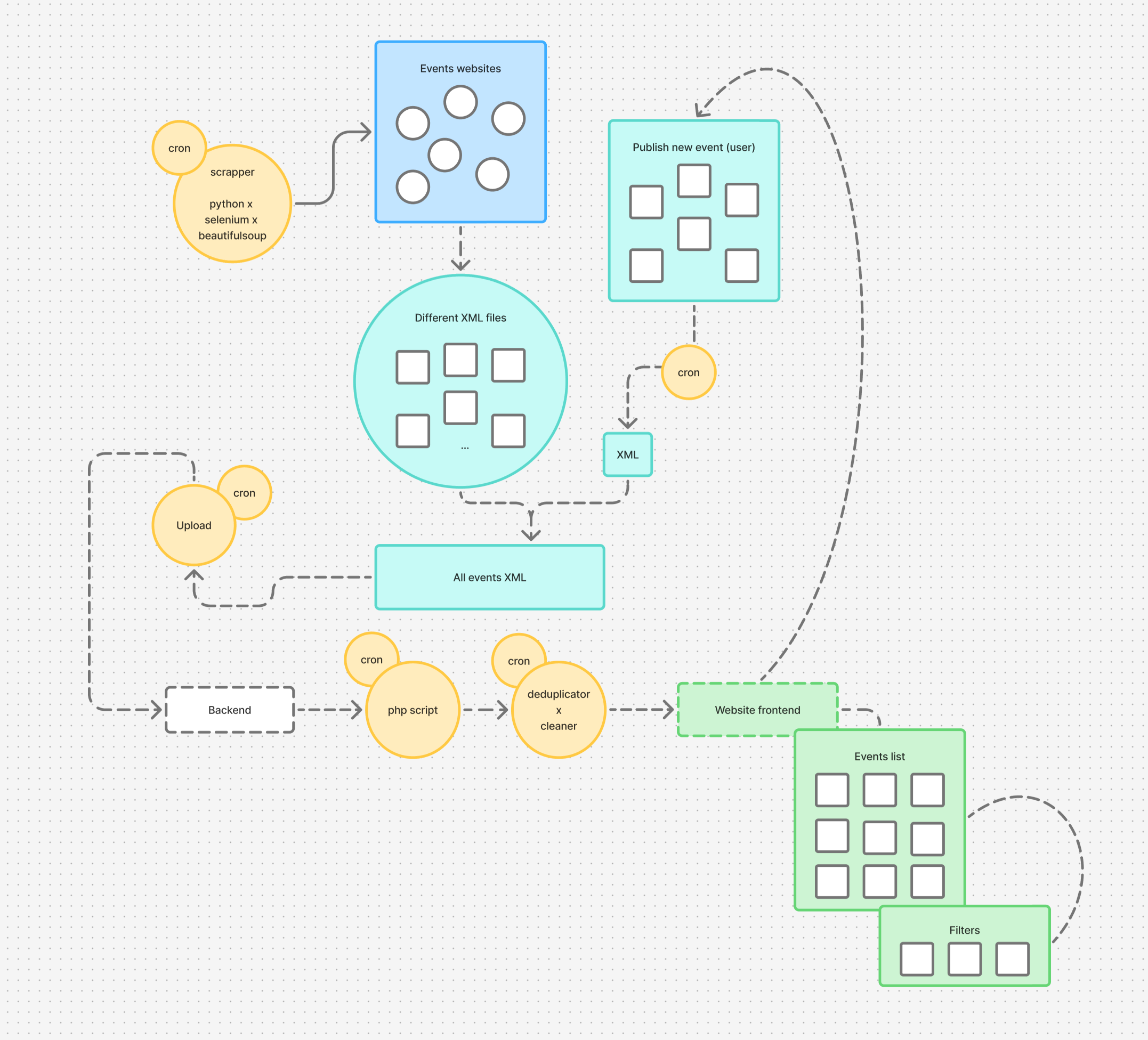
The website’s backend is run on a self-hosted server using Linux. Every day, cron jobs are triggered to run python scripts which, using selenium and beautifulsoup, collect events from multiple sources and then combine it into a single XML file, which is on its turn organized by date and time. User self-published events are also inserted inline. Once the events are uploaded to the website’s backend, a cron-triggered script runs to update the query loop with the new set of events and then runs an AI-powered deduplicator.
The final result is updated on the frontend, where dynamic filters allow for a better search mechanism.
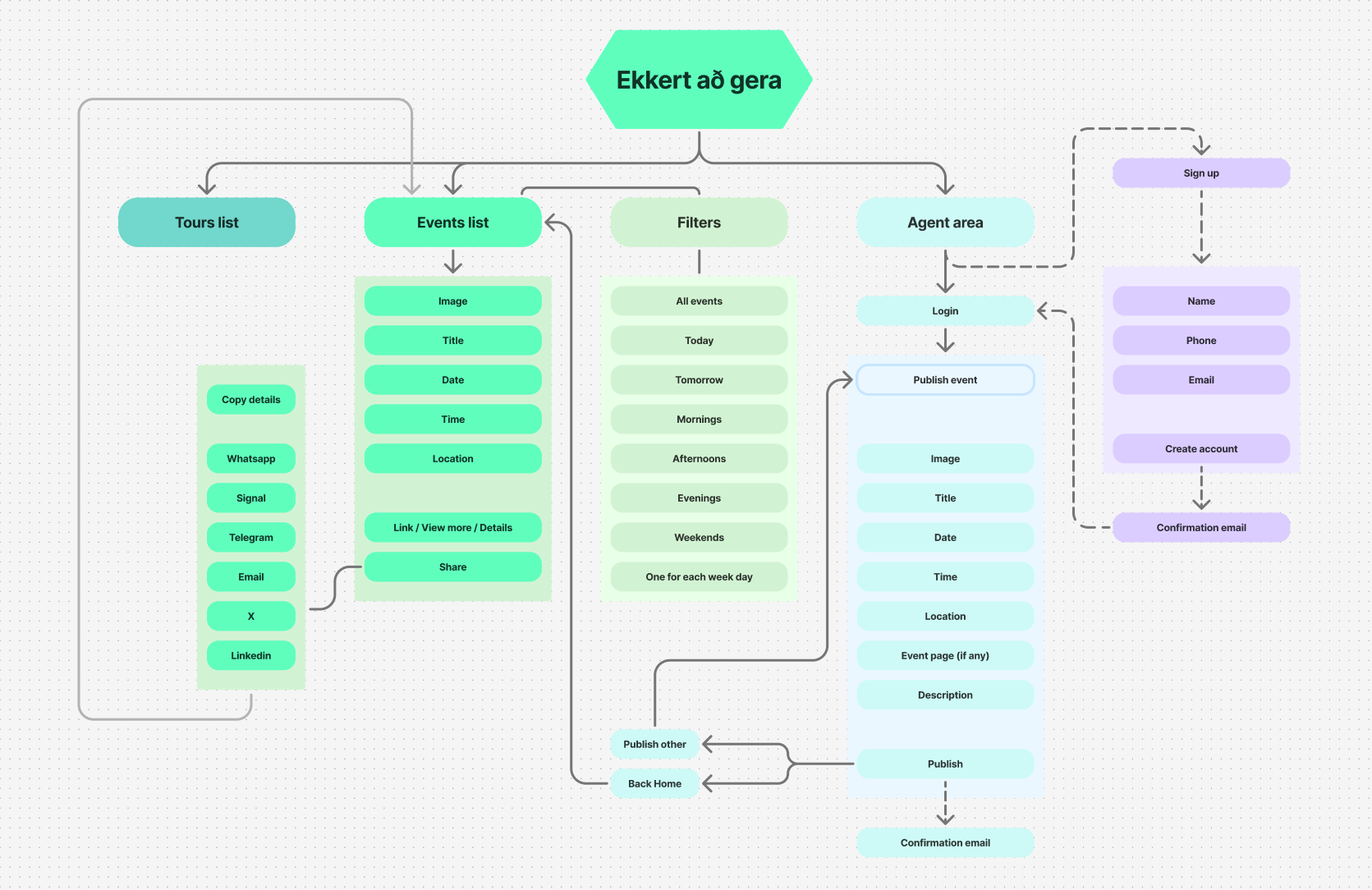
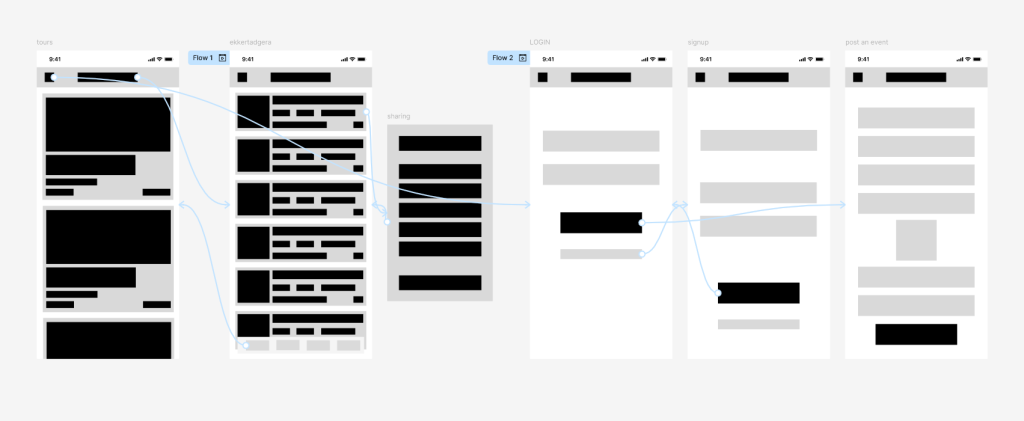
In order to guide the design process and make it smoother, an Information Architecture plan was then crafted.
The website’s frontend can be split into fours different, yet communicating parts:
The events list; the tours list, accessible through the filters; and the agent area, accessible through the Plus (+) button on the header.
Low Fidelity Prototype
After iterating on the lo-fi prototype, an initial user flow was outlined in order to understand which steps the users needed to perform in order to complete their main tasks – open the website, navigate through and filter events; self-publish events.
Design Iteration
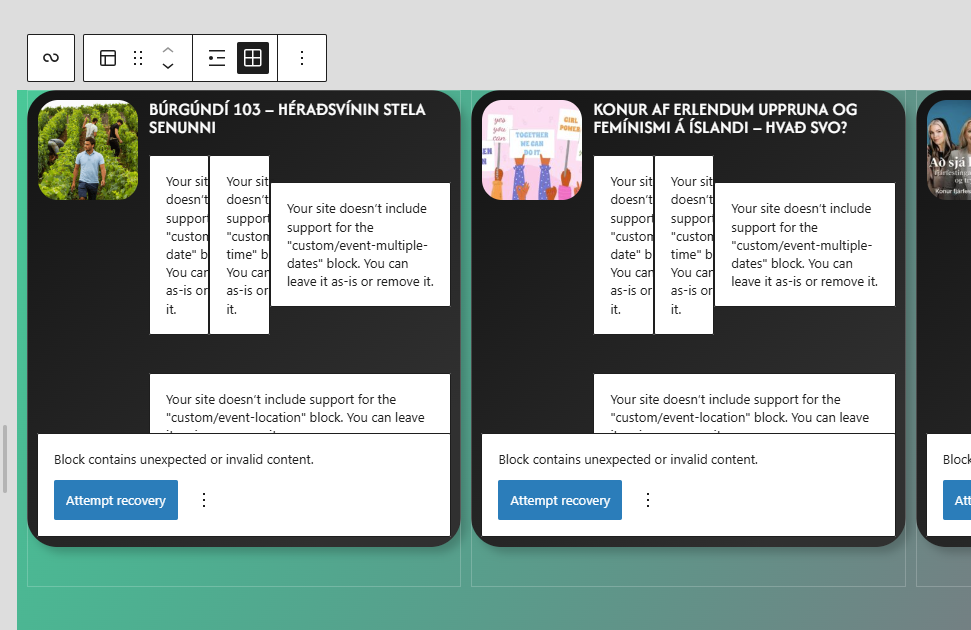
Due to WordPress “Query Loop” (QL) block limitation when retrieving information from an XML file, design options were limited to a certain format. After connecting the QL block to the dynamic tags, the QL became unaccessible via the front end.
This made editing the front end nearly impossible to do in a graphic environment, hence all the alterations had to be processed on the backend.
Presenting…

Design Principles
Accessibility
The choice of colors had in consideration an appealing and smooth design while keeping in mind the high contrast between readable elements and the background, making it easier to access by visually impaired people.
Simplicity
Thought for simplicity, the event cards feature only the most necessary information, such as title, date and time, and location. And then, a button allows for sharing with friends and also to view more event details, such as description, price and other relevant details.
Event cards
In design it is important to know where, when and what to give up. The website could have additional functionality, but it is tailored to serve a singular purpose – list all the events happening in Iceland.
Filters
Filtering was one of the most demanded features. Even though it is not possible to filter by type of event – which was a conscient and deliberate decision – it is possible to use the filters to choose when.
What I learned from this
Iteration is not always smooth.
The design had a couple previous versions before reaching the final consensus and different versions were tried. It was of course relevant to decide where to give in (I chose not to add the event description to the event card) as it was to decide which was the most necessary information to include.
Color contrast makes things easier.
From the initial design idea to the last, contrast was increased by using darker backgrounds and brighter fonts, creating a very straight-forward interface which enhances accessibility.
Python x Cron x Php
For the website to run successfully, a backend was created using cronjobs and python scripts using beautifulsoup and selenium. I had no previous experience with python. To achieve the frontend result, php scripts had to be created in order to import the relevant information from the an xml file containing all the events.
What can still be done
Better filtering/search system.
The filters system can still be improved, perhaps by adding different filtering options such as event type. A search bar is in the making.
Free x Premium version.
At the moment of the first release, the website is completely free to use and access. Monetizing the website is a possibility, perhaps through the use of inline ads.
Limitations
Filtering
As per now, there is a limitation when it comes to filtering by event type, since the events are scrapped from multiple sources and not all of them include this information.
Cron jobs are not reliable enough
The scrapper which runs on Linux is not entirely reliable, requiring human intervention to a certain extent.
Facebook Events
Facebook Events are still a work in progress. Facebook uses dynamic tags to store their events, making it difficult to extract the information accurately.
Visit ekkertadgera.is

I am Jaime.
Get in touch for work inquiries.