
Bringing visual art to THE blind and visually impaired
A talk about accessibility and inclusive practices.
In short:
By using a mobile app to scan information featured in specific QR-Codes and tactile flooring (tactile lines and dots on sidewalks and curbs, on which lines mean walk and dots mean stop), blind and visually impaired people will be able to navigate outdoor and indoor spaces independently.
The QR-Codes can feature any information: street names, store names, directions, live public transport times and directions, supermarket products and prices – and the list goes on. Pointing the phone at those QR-Codes will retrieve the featured information audibly, and automatically translated to the phone’s language of choice.
By integrating a cohesive system of tactile flooring along with those QR-Codes in the city, the blind and visually impaired population will be able to navigate independently, outdoors and indoors, without assistance, being able to use services on their own, such as museums, coffeeshops, bakeries, supermarkets, hospitals, etc.
This will result in a better integration of the blind population, while empowering their independent living.
But let’s talk about visual arts for a start. Us, visual artists, tend to produce content which is meant to be seen.
And by seen, I mean with ones eyes. Even a performing musician, who typically produces content which need to be heard, will usually bear in mind to apply the usage of light and color to the show in order to please its audience’s eyes. But while a musician creates content which can be heard,
visual artists usually leave the blind and the visually impaired people out of their target audience.
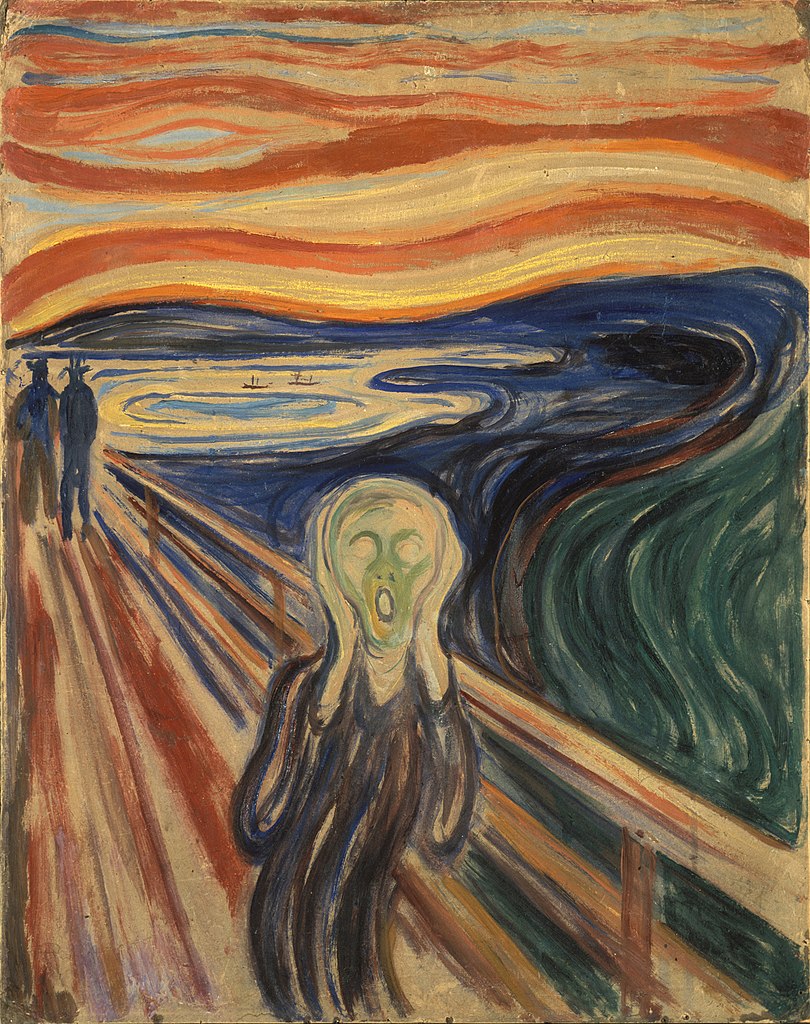
In recent years, the world has become more and more accessible. Curbs have become lower while integrating ramps for wheelchair users, pedestrian traffic signs usually feature audio cues, phones can be accessed through voice commands, websites can be listened to – like the picture above, for example, which features a screen reader optimized description. Accessible architecture and technology has become the standard of the society we live in but
there is still room for improvement.

Here are some examples of accessible technology and their practical uses:
Screen readers
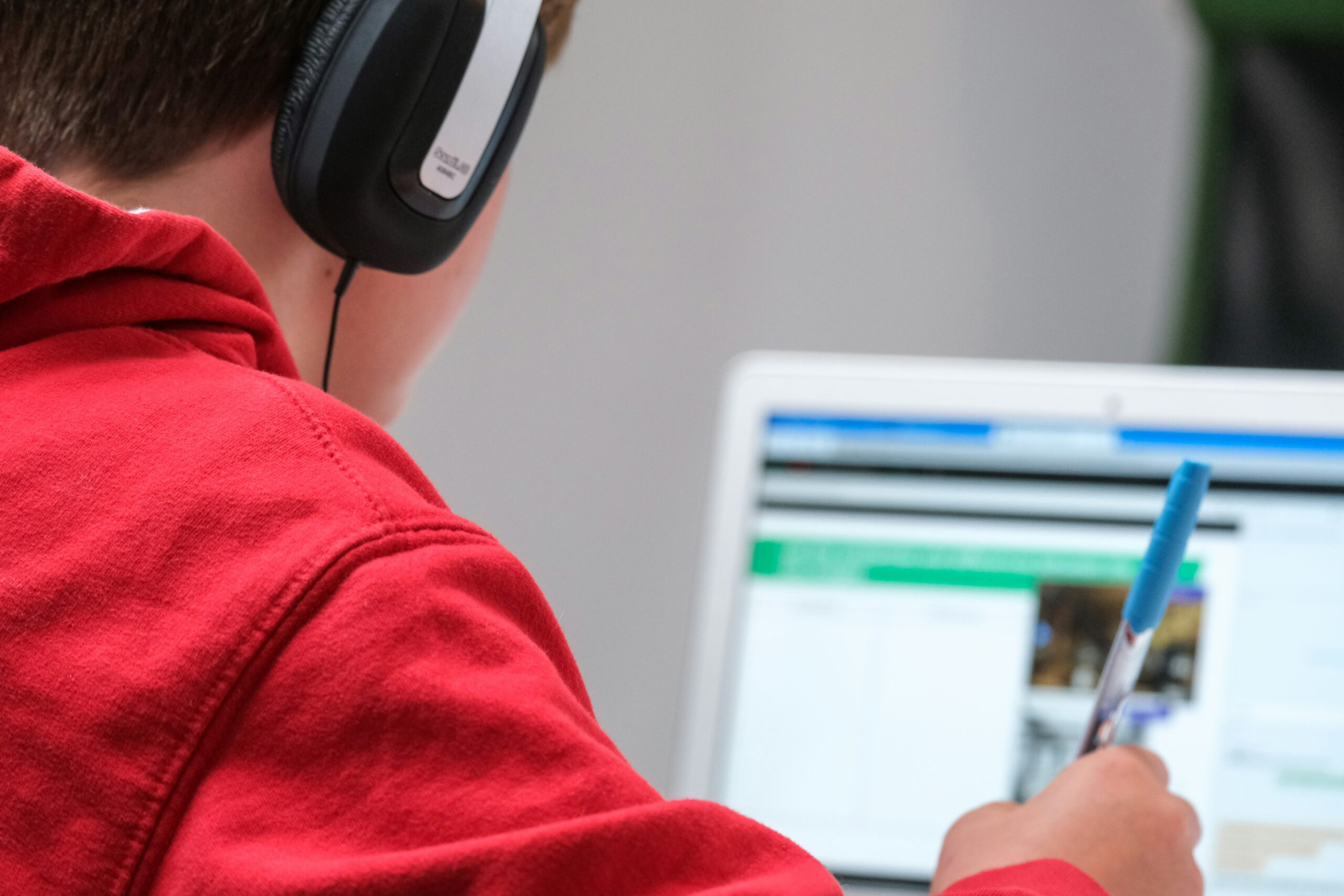
Screen readers are meant to assist the blind and the visually impaired to extract meaning out of a text, or even a full webpage, considering captions for each image are in place. With the use of screen readers visually impaired individuals can “read”. This technology, initially thought for the blind and visually impaired, became very useful to readers with severe dyslexia, especially dyslexic students who have troubles extracting meaning out of written words.
Voice recognition
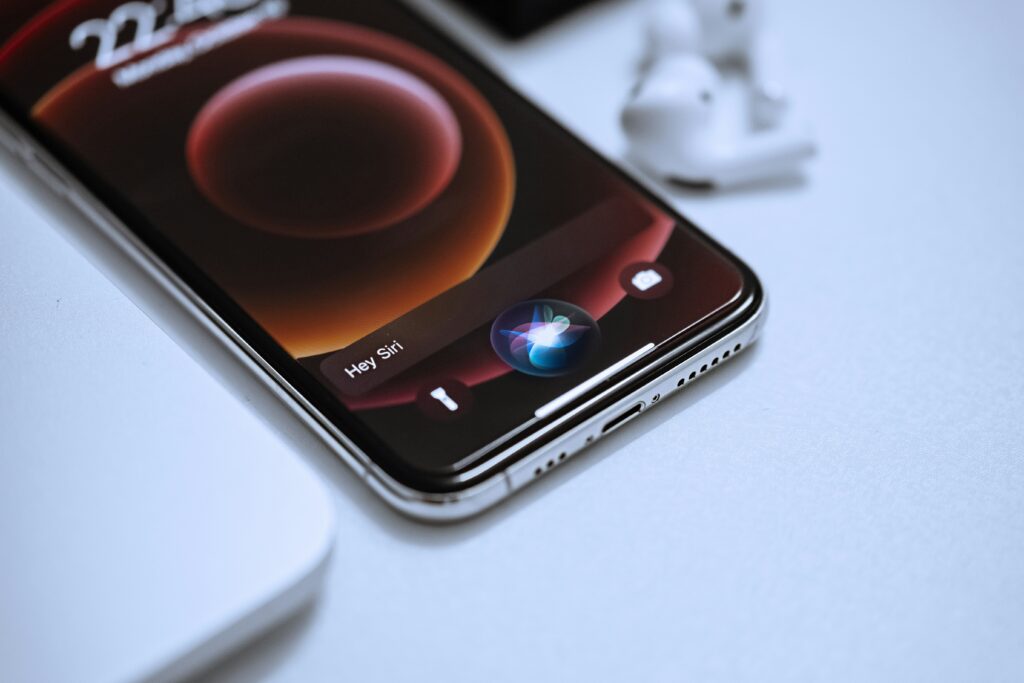
We use smartphones and computers at all time, without even considering accessibility matters. Millennials remember how the interfaces became clearer and easier to use with each update, but we can barely conceive a blind person with a phone. Voice recognition has changed that, allowing the visually impaired to use voice commands to make phone calls or even text. Even though voice recognition has widely improved over the years, it still works better in some languages than in others.
Braille displays
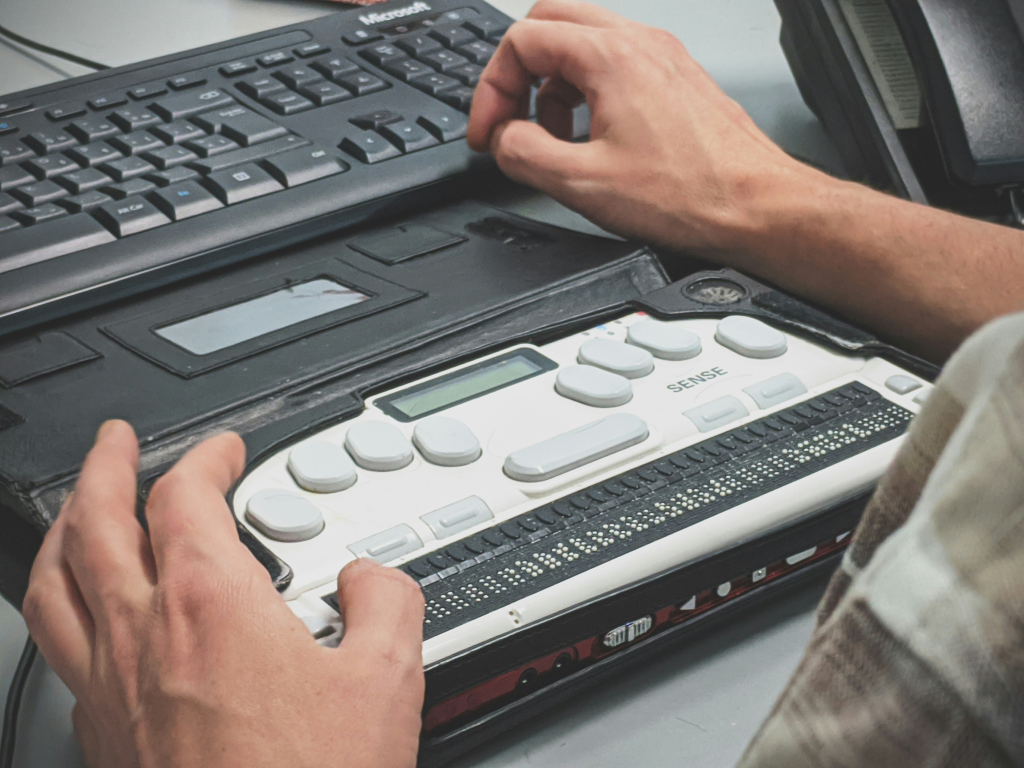
Braille displays are electro-mechanic devices shaped as keyboards, allowing the conversion of text into a tactile stimulus which can be “read” with the fingertips. Braille has been the standard since the middle of the XIX century but, as any other written material, it is language dependent.
Automatic doors
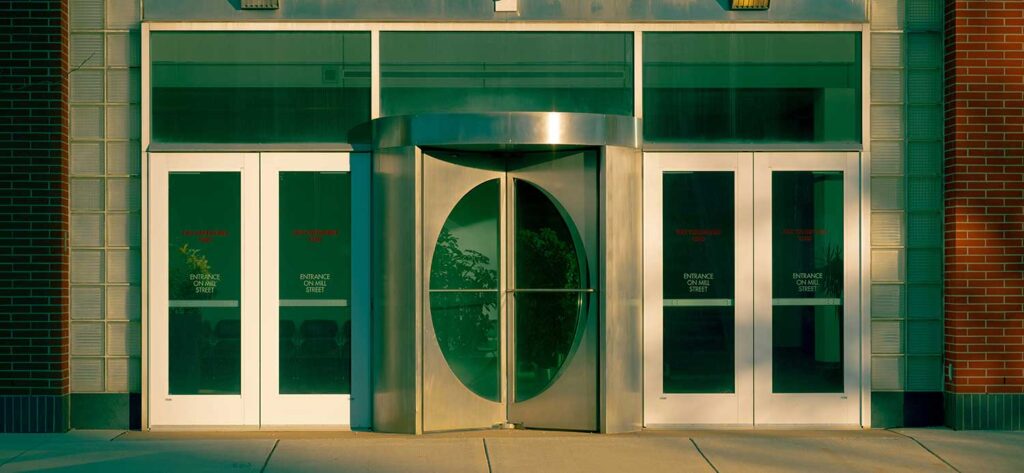
One of the most common and widely spread accessibility technologies are automatic doors. We can see them at malls, cinemas, hospitals… and the list goes on. Initially thought for those with limited mobility, they now serve everyone’s best interests.
Automatic Wheelchairs
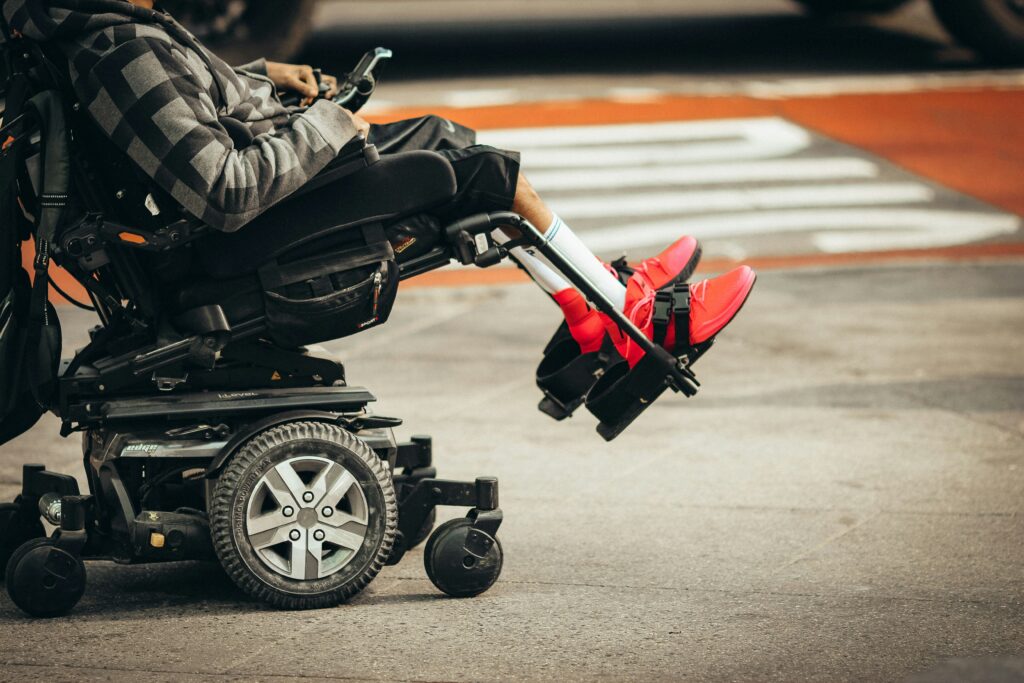
Individuals who suffer from paralysis often need the assistance of automatic wheelchairs, which allows them to move autonomously from point A to point B. Even though they were initially thought for individuals with upper and lower body paralysis, automatic wheelchairs also serve other tiers of the population, such as the elderly, who often exhibit low strength.
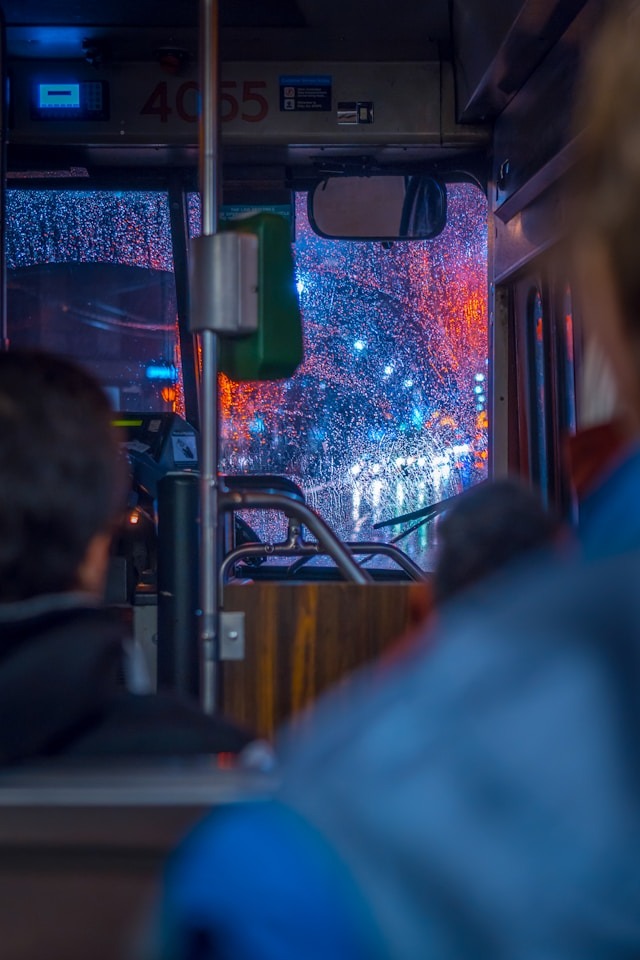
Accessibility for the visual impaired
While screen readers, braille readers and voice recognition devices have helped the visual impaired in their autonomous search for information,
there is still room for improvement when it comes to their mobility and their capacity to travel independently.
Cities are built for fully functional individuals and, while pedestrian traffic lights and buses already include audio cues, easily moving from building to building and street to street remains an almost impossible task. It almost gives us the impression that city planners assume the blind and the visually impaired are not able to move around independently, having therefore implemented accessibility queues where it is the most convenient for those who are fully functional.
Take this as an example:a p ersonal assistant takes their blind client to the bus stop and waits for the bus to come. Once on the bus, the blind person can navigate. They will find a seat and wait patiently for their bus stop which will be announced on the speakers. Once off the bus, another person will be there to assist them with their outdoors navigation. There are navigation cues for the blind and visually impaired inside bus, but not before entering or after exiting.
When it comes to the road crossings, audio cues – initially installed as an accessibility perk for the visually impaired – are almost useless in the absence of tactile floor maps. They allow for a blind person to cross the road from one side to the other – and then what?
Cities fail when it comes to the integration of their blind population. Basic tasks such as navigation, grocery shopping or even a visit to the nearest swimming pool are usually compromised, if not impossible.
Social responsibility and innovation
As artists we tend to question, think and create art pieces which are usually out of the box or, at least, present something new – either it’s a new concept, new looks, improved functionality or even a call for awareness.
Artists which create tactile artworks, such as carpenters, sculptors, ceramic artists, create material which is meant to be touched, smelled, seen. Or, in other words, felt. When it comes to visual art, it often lacks any tactile component, unintentionally excluding an entire segment of the population.
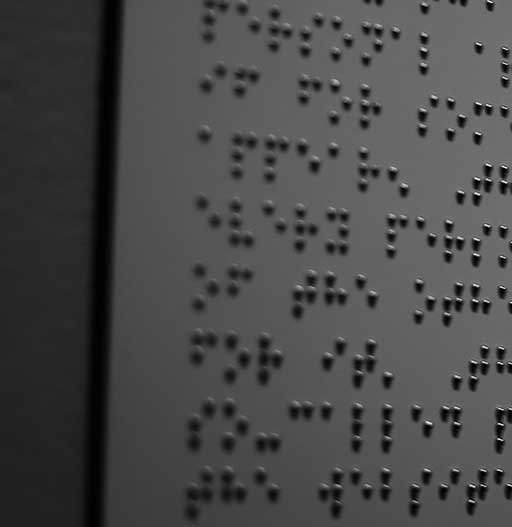
Even books—tangible objects by nature—are designed to be seen rather than touched or heard.
Unfortunately, they don’t speak; they offer no audible experience.
But while an artist’s audience does not have to be universal, isn’t it their duty to carry their message as far as it can get?
And that brings us to the what and how of bringing visual art to the blind and visually impaired.

Creating accessible spaces using Navilens
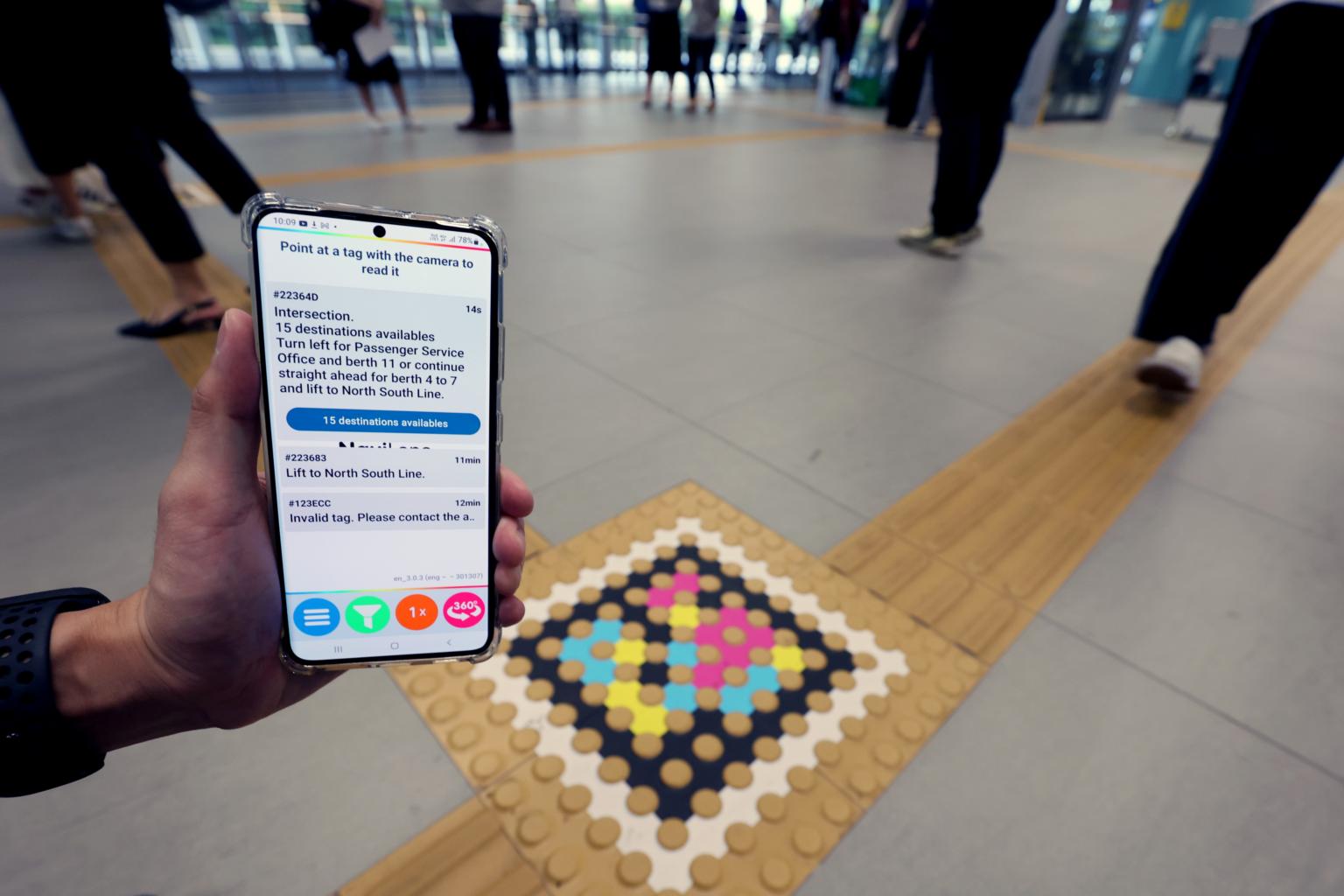
When it comes to accessibility for visually impaired people, Navilens is probably one of the best solutions I’ve come across. It uses their enhanced QR-codes, which are brighter, simpler, can be detected from a longer distance and in poor lighting conditions, to read out loud directions and other information.
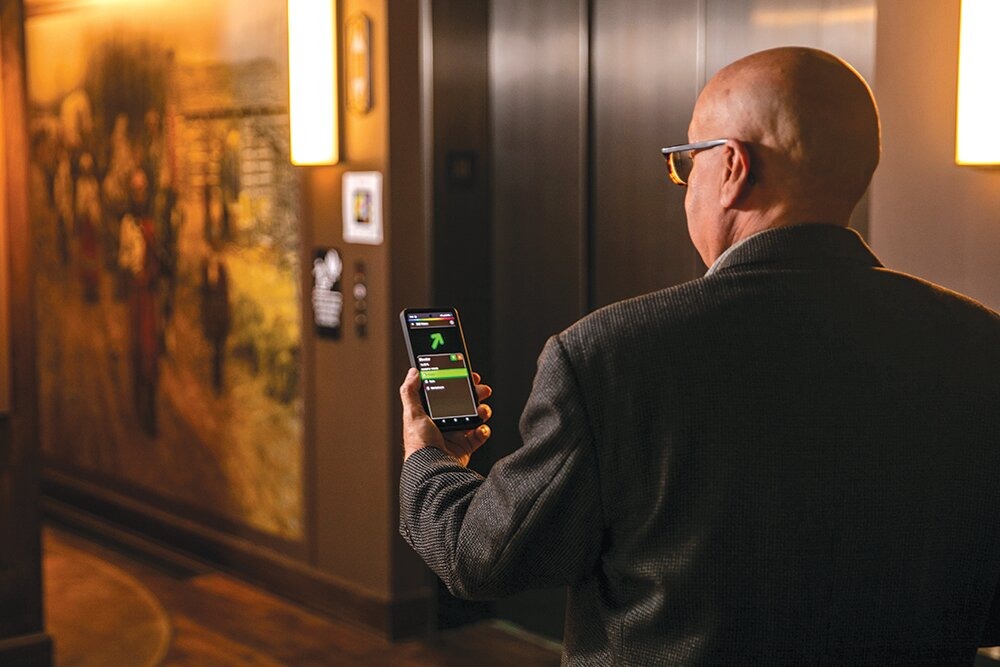
Those QR-codes can be placed nearly anywhere.
At home – in the bathroom, next to the power sockets and switches, in kitchen products and appliances -, in institutions such as hospitals pointing out directions, in the supermarkets displaying information about the products, or even in museums and galleries, displaying accurate information about the artist, the space and artworks exhibited.
Regulations
While there are no regulations in place for the implementation of Navilens QR-codes, there are standard regulations for the implementation of tactile foot maps. In Iceland, which is the country I currently live in, they can be found HERE.
In short, those mention that both indoor and outdoor systems should be cohesive and refer to a few rules when applying the tactile maps. Dots mean Attention, Lines mean Walk. Simple as that.
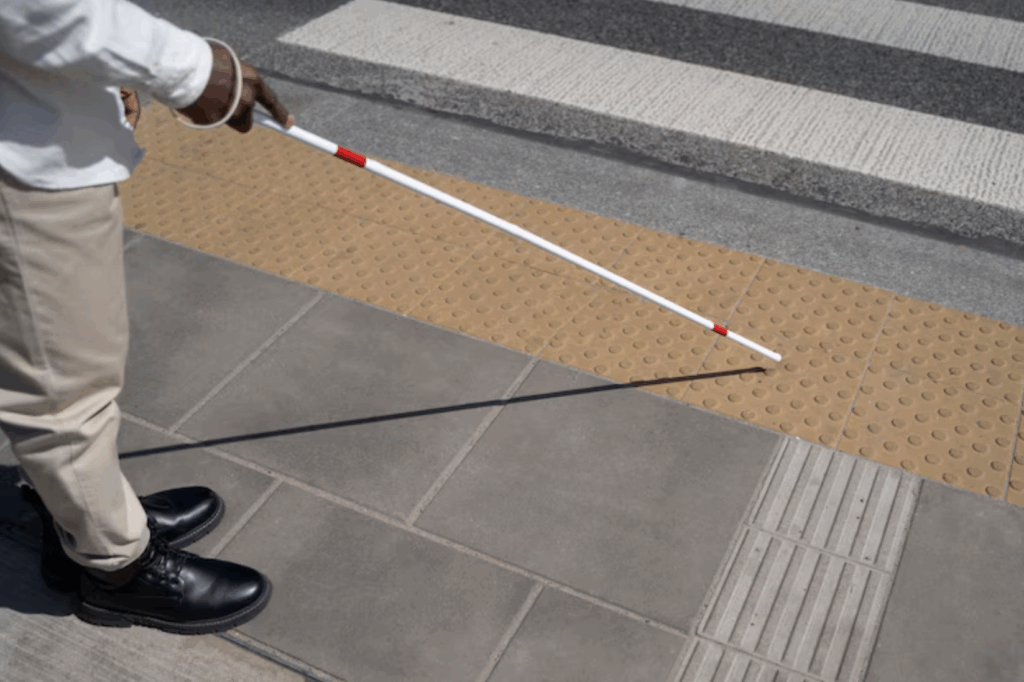
While I believe that the use of tactile maps might not be self-suficient, the integration of the tactile maps system with a system such as Navilens, both in open spaces such as cities as indoors, in places like schools, hospitals, art galleries, might contribute for
a better integration of the visually impaired population at many levels, enabling to live an independent life and to participate in educational and/or cultural events without the need for assistance.
Those QR-codes can integrate directions on the street, streets and businesses names, and even more specific and dynamic information such as bus routes schedules.
Coordinating the wide use of Navilens with the proper implementation of pedestrian tactile maps will support independent mobility of the visually impaired population.
Let me show you how.
Implementing an integrated accessibility system in Reykjavík
Few might have realised this, but Strætó already uses the Navilens system in order to improve accessibility. Bus stops are equiped with Navilens QR-codes which display routes, departures and times on demand – and, just as curiosity, I bet you haven’t even realised that Kellogg’s morning cereal boxes also have a colorful QR-code on the side.
And not just Kellogg’s, there’s a plethora of other brands which have adopted better accessibility practices.
Now imagine an entire accessible supermarket, with QR-codes which display on-demand product names and prices. Pretty cool, no?
On Reykjavík’s streets, some of the curbs and sidewalks in Reykjavík are actually very well marked, making life easier for everyone. But tactile floor maps are nearly inexistent.
Take Lækjatorg as an example. The bus stop has a Navilens code – which is poorly placed and fairly hidden, to be honest – but there are no floor tactile maps leading towards the bus stops. While Austurstræti and Lækjatorg are fairly accessible places, a blind person would have difficulties to orient themself out in the open.
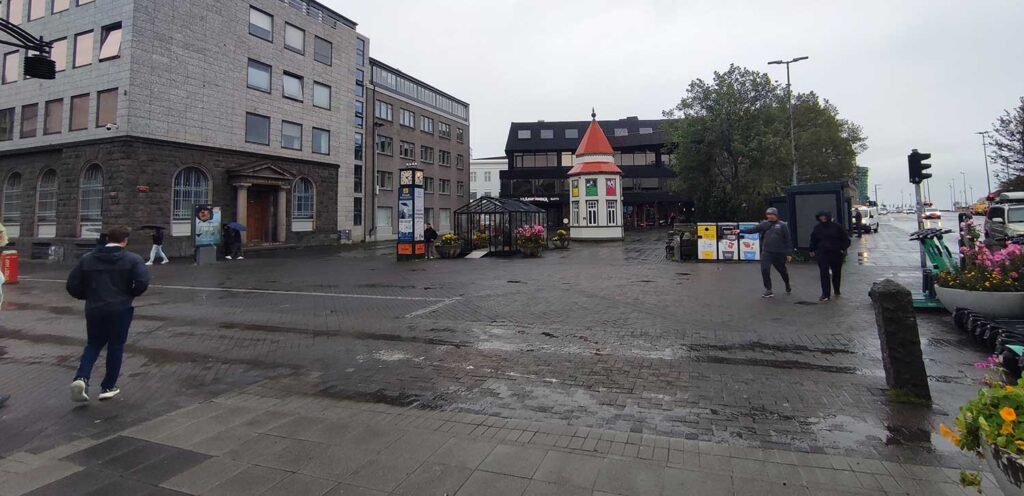
And this is where the accessible QR-codes come in. In such open spaces, setting up accessible QR-codes could easily make up for the inexistence of tactile flooring.
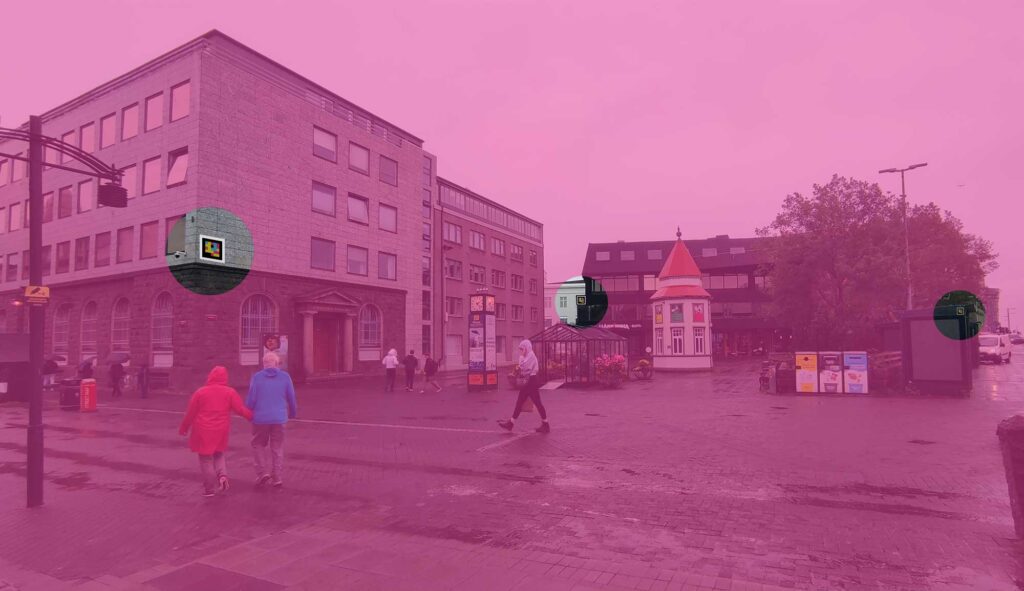
With a phone, a visually impaired people would be able to activate the app with a voice command and then scan their surroundings for directions. The app is capable of audio queues, which identify the direction and distance of the destination.
Like this, a visually impaired person would make it independently to any store, coffeeshop, or any other service they’d want to go to.
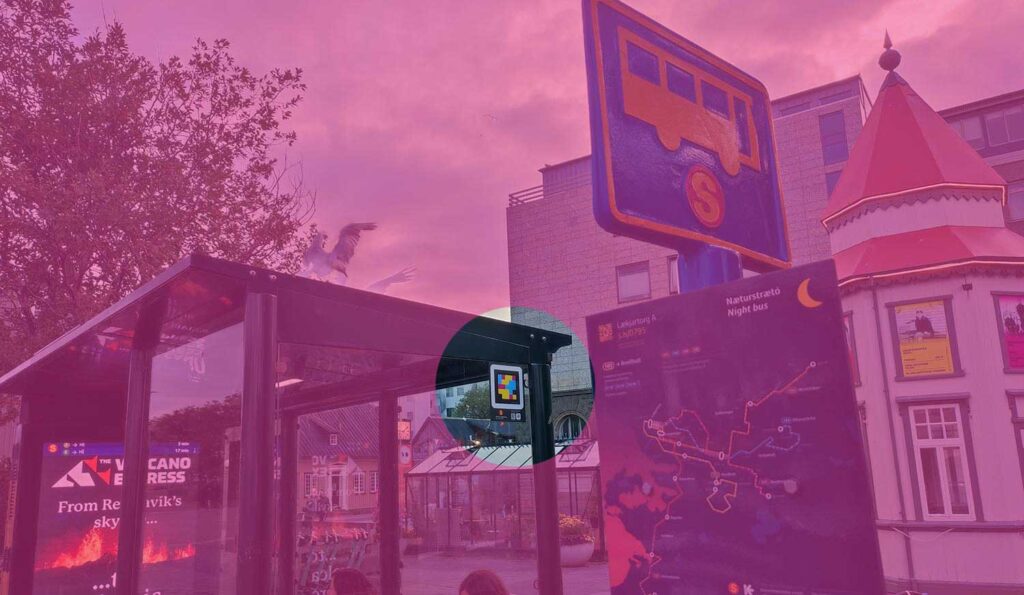
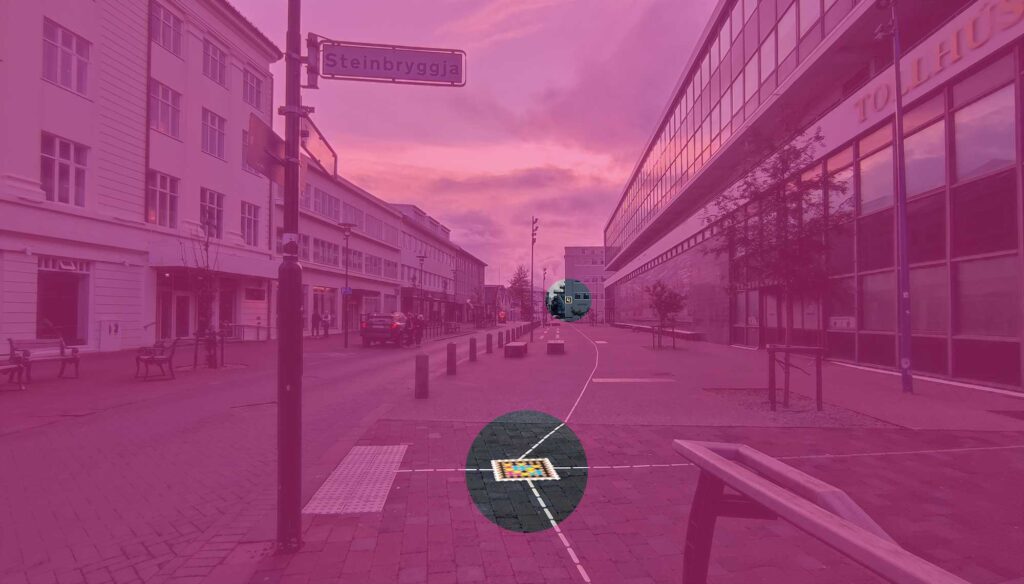
I believe action should be taken within the community, and that if every individual acts locally, we will make up for better world.
Starting small
A pilot case study within the community
I recently joined a cowork space at hafnar.haus, a creative community in Reykjavík. It is a vibrant space which hosts about 300 people from different yet complementary fields. While browsing some of hafnar.haus’s content, namely its webpage, I came accross a statement which triggered me and made me stop for a moment:
…a community of like-minded people, all working to make this an inclusive space for all kinds creatives.
While we are not all working towards inclusiveness and accessibility, some of us could. As part of my work is to bring UX into the real world (read more about it HERE), I thought it would be interesting to try to bring into the community a layer of the population which is usually left out: blind and visually impaired people.
According to the information found at Blindrafélagið’s website, even it is not possible to precise exactly how many blind people are currently living in Iceland, they are estimated to be roughly 900. It is known that over the years the prevalence of blindness has decreased, mostly due to a reduction in the presence of glaucoma.
According to Blindrafélagið Íslands, a good part of those people already use electronic devices such as smartphones and also the Navilens app. Even though, this segment of the population could benefit more inclusiveness and better accessibility.
Implementing a new accessibility system at hafnar.haus and hafnar.space
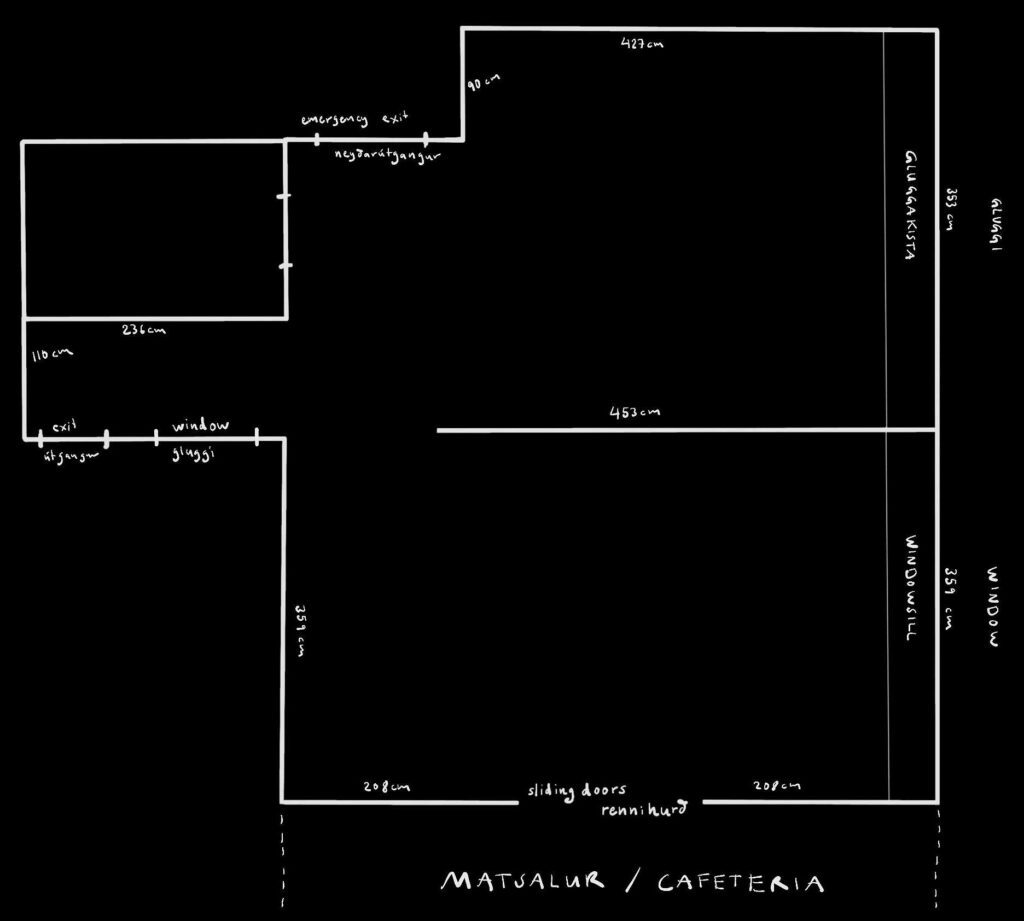
For those who don’t know about yet – you’re totally missing out – hafnar.space is an artist-run gallery inside hafnar.haus. The catch? It’s on the second floor, on the space which lies behind the communal room, slash restaurant, slash cafeteria.
First, a blind person would have to make it through the door and then onto the second floor. That is either by using the stairs which have no tactile markers, or by using the elevator which features no tactile markers or audio cues. Once at the second floor, they would have to make it past the door, onto the cafeteria and then through a narrow corridor of in between tables and chairs in order to reach the gallery space. Oh – I nearly forgot – and then all the way back.
The current regulations dismiss the need of floor tactile markers in tight spaces; so implementing those would be a mere formality. Still, braille numbers would be necessary at the elevator buttons. It would also be great to embed tactile flooring on the stairs. But apart from that, Navilens can lead the way.
Strategic placement of accessible QR-codes at hafnar.haus
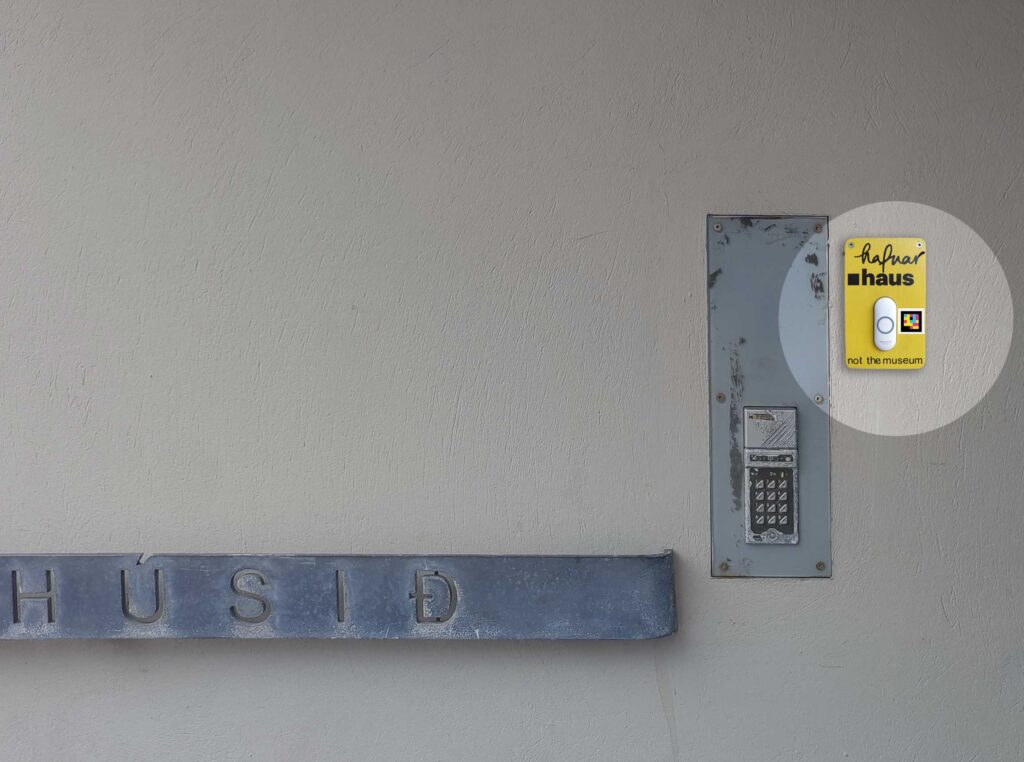
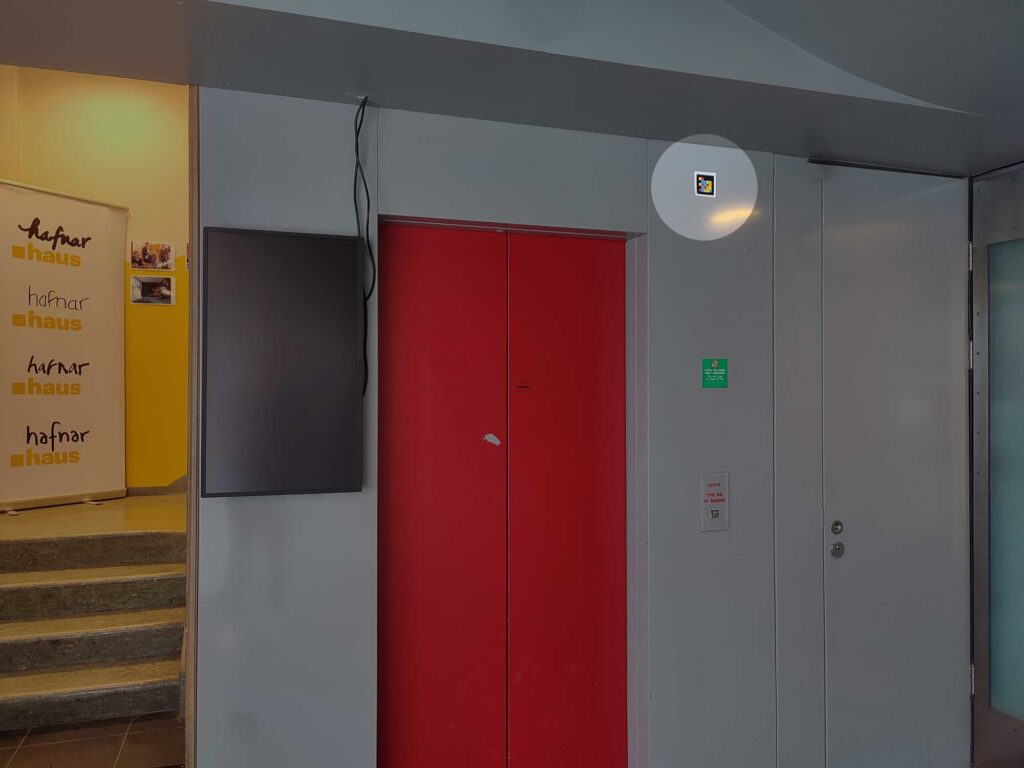
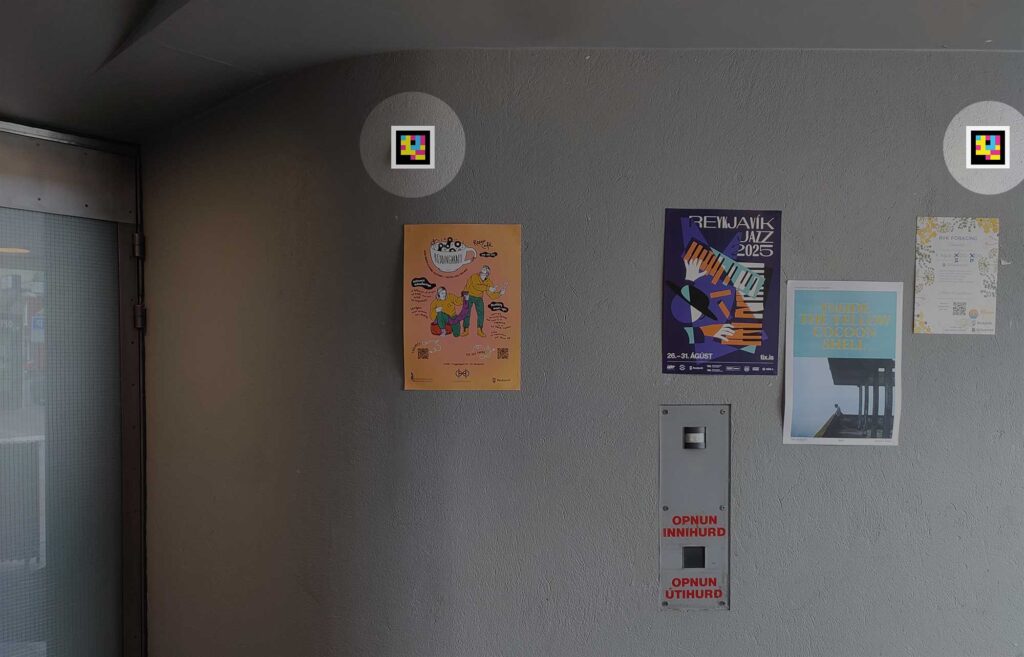
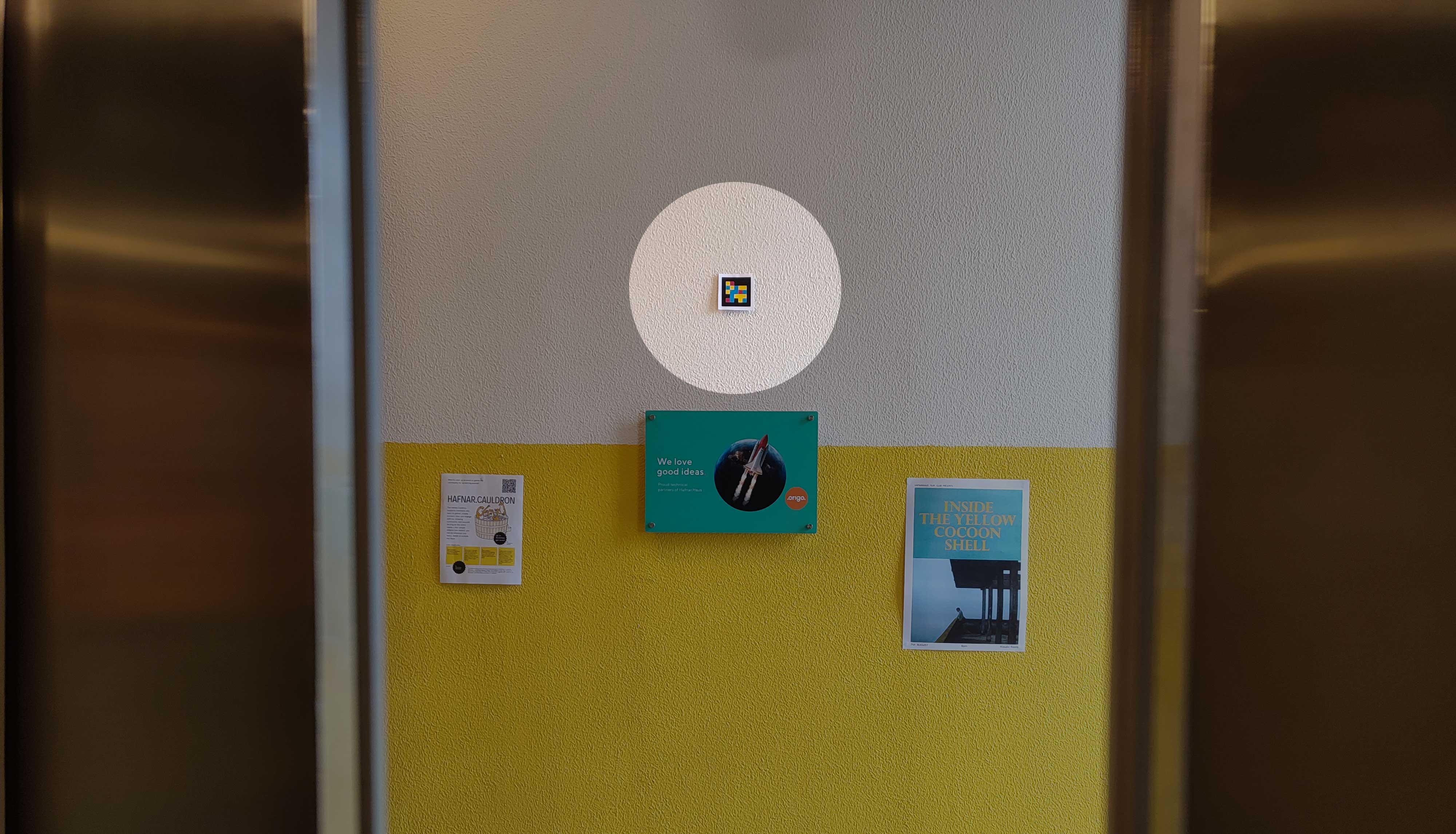
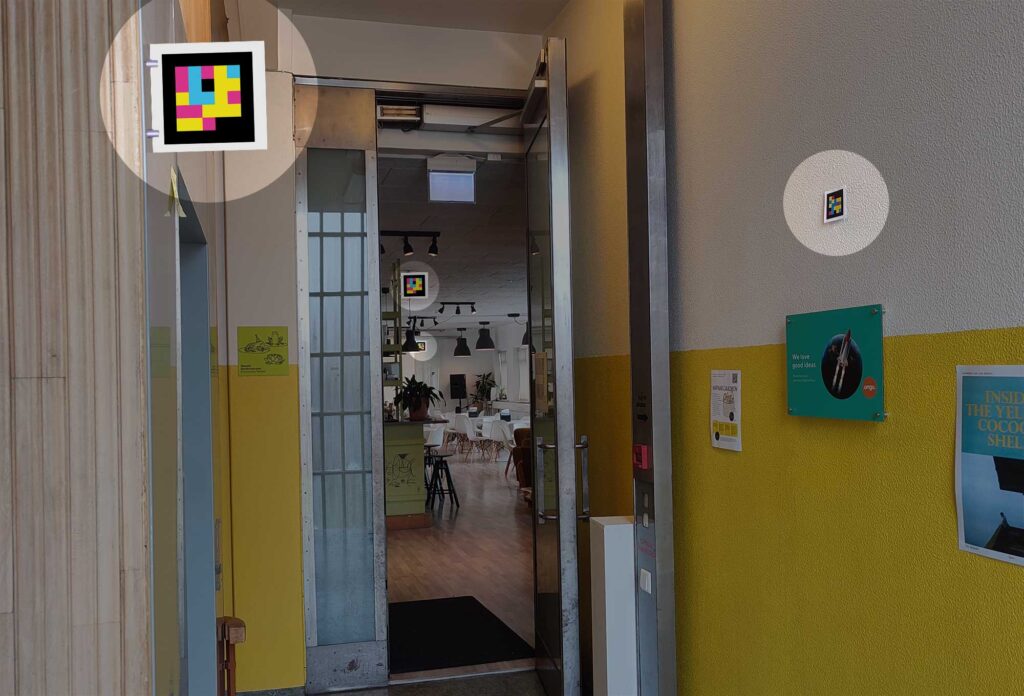
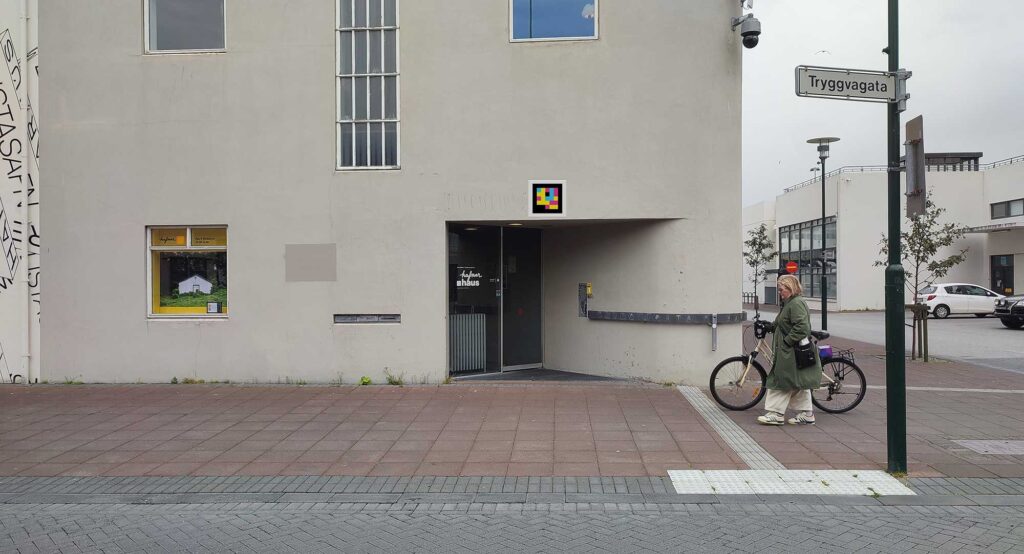
Accessible QR-codes can be implemented at hafnar.haus, on the first and second floors.
First floor
•Above the entrance
•Next to the door bell
•By the automatic sliding door (both inside and outside)
•By the elevator and, if needed, next to the elevator buttons
•Opposite to the elevator door, so that it is detected when coming out of the elevator
Second floor
•By the elevator
•In front of the elevator door
•At the entrance of the cafeteria
•On the ceiling by the middle of the room (indicating the way)
•By the gallery’s entrance (hafnar.space)
Additional QR-codes
•At the entrance of the Trunó Room as a resting area with seats
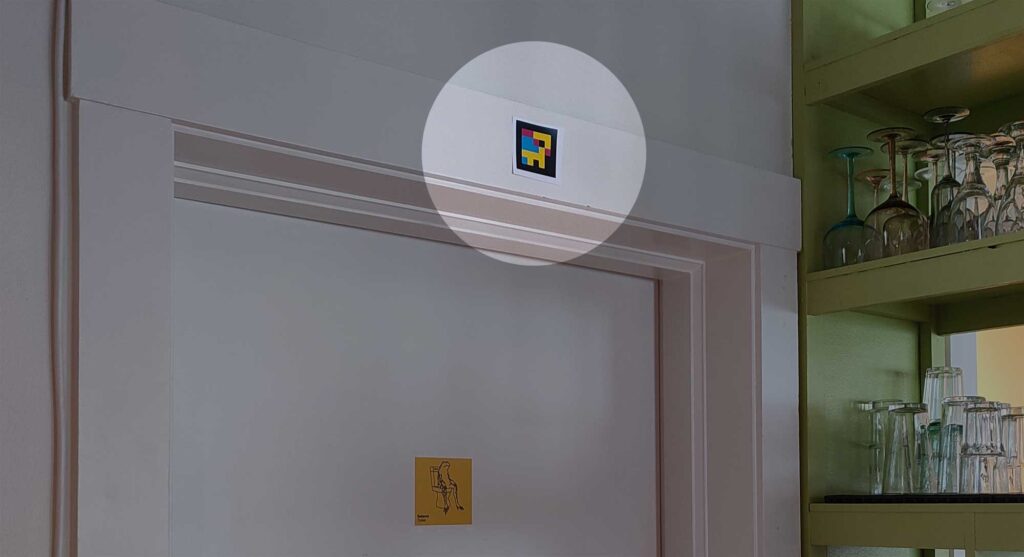
•In front and inside the accessible toilet
•By the trash bins
•At the bar
See the gallery
Click the images to enlarge
What about hafnar.space?
Hafnar.space is a small gallery on the back of the Wasabi Room, at hafnar.haus. Its wide doors make it accessible for most, and its due to its small dimension it does not require the installation of tactile paths.
In that sense, the mere use of accessible QR-codes would make the space accessible for the visually impaired.
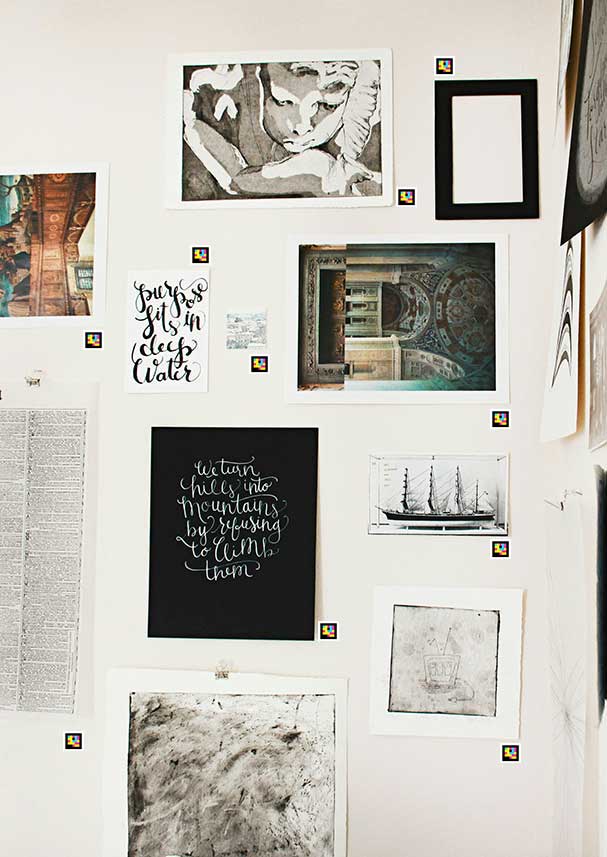
Strategic placement of accessible QR-codes at hafnar.space
•By the access to the second room (on both sides of the wall)
•At the exit of the space, guiding people back to the cafeteria
Getting to the point (finally!, you say)
Up until a few weeks ago, I would have never considered a blind person as capable of experiencing a museum in its entirety due to their visual impairment.
But just as a blind person uses their other senses to navigate the world, they can also touch and/or listen to a description of an art piece as a way of experiencing it.
And no, I am not talking about how to denotatively describe a painting of the sea; I am talking about combining a denonative and conotative text-to-audio description, in which the artist can fully capture their descriptive memory and present it to a broader audience. This process involves nearly no extra work, apart from associating the descriptive memory for each art piece with each QR-code.
In order to do so, artists will be challenged to create very complex descriptive memories to describe their work, while fighting for simplicity. Art which can reach all, and not just for some.*
This has the potential to change the viewers’ perspectives – but also the capability of changing the artist and their creations.
By granting the visually impaired the ability to experience art through alternative forms of ‘seeing’, we are contributing to a better world, not only more inclusive but potentially more creative. By bringing visual arts in all its complexity to the blind, we are not only educating and raising awareness, but also potentially unlocking hidden and unexplored capabilities. And all this can happen while improving accessibility and setting the tone for the future.
*In the case of the deaf-blind, the only way to showcase art descriptively would be the resource to Braille. Braille has the issue of being language-specific, while the accessible QR-codes will automatically translate into the phone’s predefined language.
What I learned from this
People adapt. Those who don’t see, try to hear. Those who don’t hear, try to touch, taste or smell. Even built for those who are able to use all their senses to navigate the world, smartphones are a powerful tool which can be programmed to the several digital needs. And, without a steep learning curve, even the blind and the visually impaired can use them as their personal assistant.
Technology has its limitations, and creativity is often the biggest limitation of it. Navilens is a major accessibility improvement, and its accessible QR-codes can be used virtually anywhere, from almost any angle, from longer distances and in poor lighting conditions.
Limitations
The app still requires people to learn how to use a mobile phone.
And while voice recognition is great in English, it is often cranky in more complex languages which involve a more complex grammatical structure and the pronunciation of more subtle sounds.
The use of many QR-codes in a narrow area can overload the system and cause cognitive overload on the user. A balance needs to be achieved between the need for the implementation of colorful codes and the confusion that mixed directions can cause.
What can still be improved
While the app presents an on-the-go, groundbreaking accessibility breakthrough for the blind the visually impaired, its interface and functionality can be improved, especially when it comes to the management of several QR-codes at once.
While the west alley of hafnar.haus floor markers on the stairs, the east alley could be improved the same way. As mentioned before, most accessibility features were born out of need but ended up being used by everyone else. Adding rubber floor markers on the stairs would not only improve accessibility, as it would also improve overall security in the stairs.
Hafnar.haus is just the beginning. The city deserves an accessible route. Then a bit all over the country. Then the world.
Thank you for reading.
Written on August 7th 2025. Jaime Mascarenhas, Reykjavík, Iceland. All rights reserved.
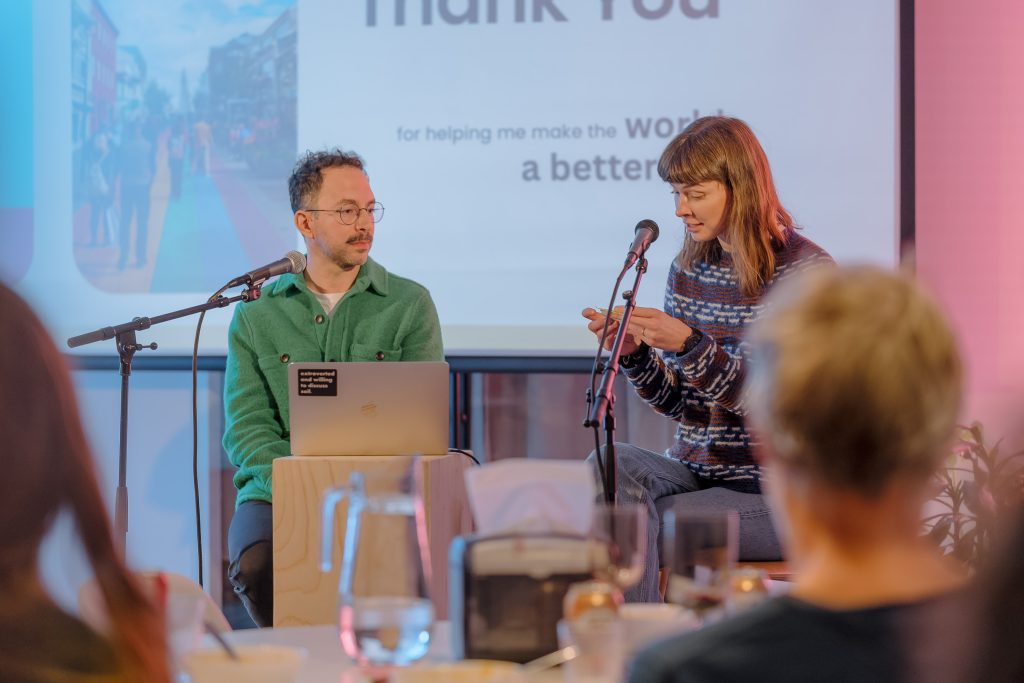
Help me make the world a better place.

I am Jaime.
Get in touch for work inquiries.